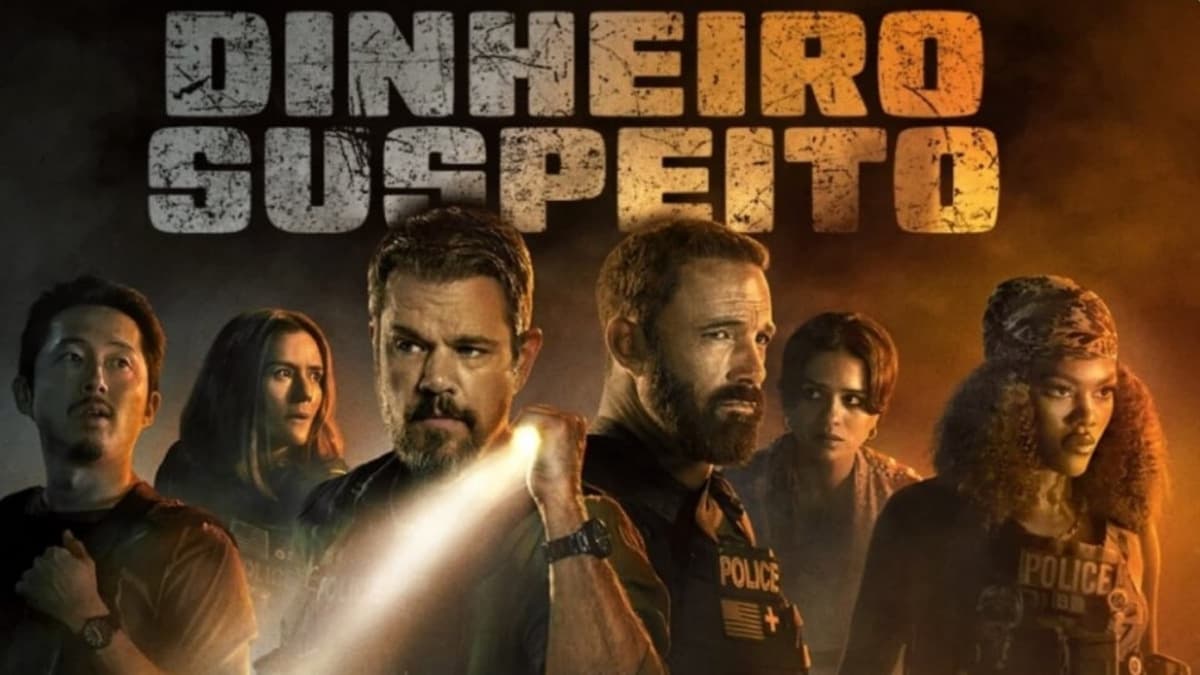
Unlike the narrative full of betrayals and shootouts, the real case involves a major police discovery, an exhausting bureaucratic procedure, and a devastating personal loss.
The film's basis comes from an episode that occurred in 2016 in the United States, involving the narcotics division of the Miami-Dade police.
During an apparently routine investigation, the team led by investigator Chris Casiano made an impressive discovery: millions of dollars hidden inside a house.
The money was hidden behind a false wall, in plastic containers used for storage. The revelation happened almost by accident, after the movement of an object that triggered the mechanism hiding the compartment.
In total, approximately US$24 million in cash was found, linked to drug trafficking.
This type of concealment is not exclusive to the United States. In Brazil, operations conducted by agencies such as the Brazilian Federal Revenue Service and police forces have already identified money hidden in walls, furniture, and even pipes — a common strategy used by organized crime to avoid seizures.
The Most Tense (and Real) Part of the Operation
Contrary to what many people imagine, the most critical moment was not the discovery — but what came after.
By protocol, police officers were required to count all the money manually and on site, without removing it immediately.
This process lasted approximately 40 to 42 consecutive hours.
During this period, the agents remained in the property vulnerable, with the risk that criminals could appear to recover the amount. Still, no confrontation occurred.
This detail is fundamental: in real life, there were no chases, shootouts, or ambushes.
The Real Tragedy That Inspired the Film Suspicious Money
If the film's action was exaggerated, the emotional drama has a real basis — and it is precisely the heaviest point of the story.
The protagonist played by Matt Damon carries a personal trauma that influences his decisions. This detail was inspired directly from investigator Chris Casiano's life.
In 2021, he lost his son, Jake, only 11 years old, to leukemia.
The pain of this loss was incorporated into the screenplay as a way to give depth to the character. Director Joe Carnahan also included a tribute to the boy in the film's credits.
This is, without a doubt, the most faithful — and most impactful — element of the adaptation.
What the Film Changed (and Exaggerated)
Despite having a clear real basis, much of Suspicious Money's narrative was constructed to increase suspense.
There was no corruption or betrayal
In the film, the story revolves around the doubt: who will keep the money?
In real life, this doubt did not exist.
The entire amount was seized, accounted for, and turned over to authorities, following legal procedures. There were no corrupt police officers or internal disputes.
No shootouts or chases
Another completely fictional point is the action scenes.
During the real operation, there were no armed confrontations, invasions, or attempts by criminals to rescue the money.
The tension existed — but it was silent and bureaucratic.
The context of the house was also altered
In the film, the property where the money is found helps build the mystery.
In reality, the location was linked to a man who used a landscaping business as a front for illegal activities related to drug trafficking.