The result was a work that not only conquered audiences and critics but also became a hallmark of prestige — something rare in a catalog dominated by fast-consumption productions.
Million-Dollar Production and Cinematic Standard
One of the great differentiators of The Crown is the investment. The first seasons surpassed the US$100 million mark, a value considered extremely high for series at that time.
This budget allowed for:
- Detailed reconstructions of Buckingham Palace
- Historically accurate costumes
- Real locations in the United Kingdom
- Minimal use of computer graphics
Unlike many current productions, the series prioritizes physical sets and meticulous art direction, creating a more immersive and realistic visual experience.
Furthermore, each episode is treated as a film. The cinematography, framing, and narrative pacing follow cinematic standards, elevating the level of television production.
The Strategy That Transformed The Crown Into a Reference
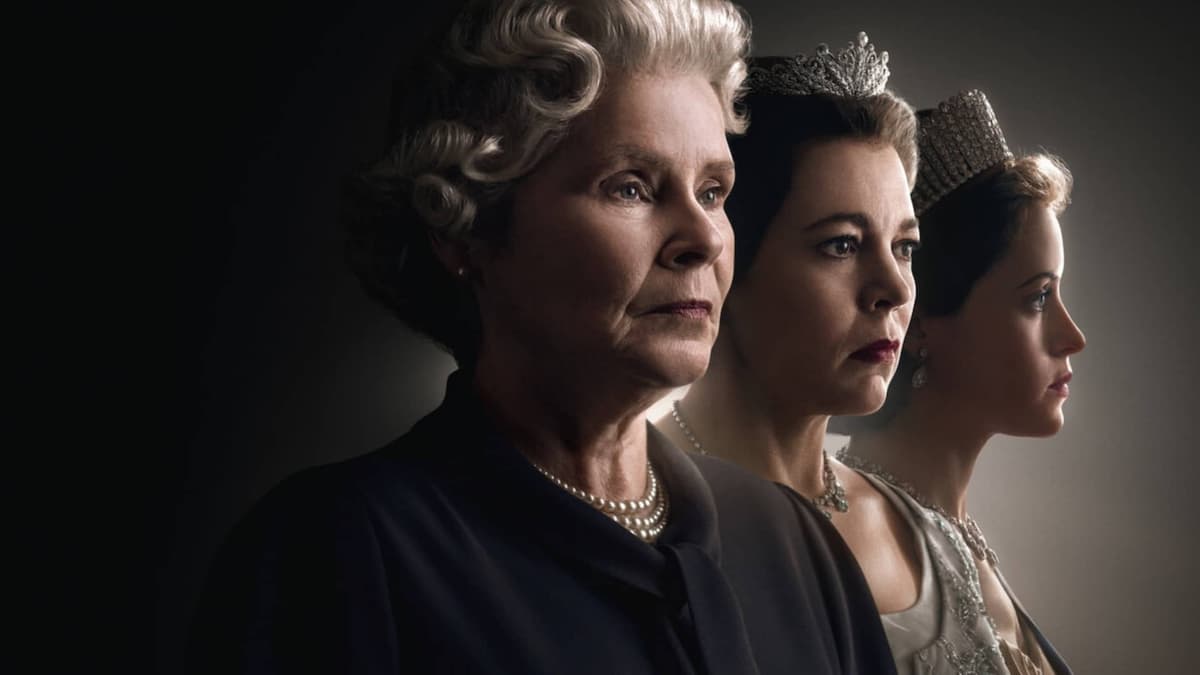
Another point that distinguishes The Crown is its unconventional approach. Instead of keeping the same cast throughout the seasons, the production chose to completely replace the actors every two seasons.
Actresses such as Claire Foy, Olivia Colman, and Imelda Staunton portrayed different phases of Queen Elizabeth II.
This decision brought more realism to the narrative, avoiding artificial resources like heavy makeup or digital rejuvenation — something that reinforced the series' credibility.
The Crown Mixes Facts with Dramatization
One of the main reasons for the series' success is its ability to make the audience believe they are watching real events. However, experts and historians warn: The Crown is not a documentary.
The production uses historical events as a basis but fills gaps with dramatizations. This includes:
Events that really happened:
- Princess Margaret's romantic dilemma with Peter Townsend
- Political tensions involving Winston Churchill
- Prince Philip's desire to adopt the Mountbatten surname
Dramatized or fictional elements:
- Private dialogues between members of the royal family
- Symbolic situations (such as scenes created to represent emotions)
- Exaggerations in political relations, such as meetings with Margaret Thatcher
This balance between reality and fiction is one of the series' hallmarks. According to experts, it is a "dramatized interpretation of history," not a faithful portrayal of events.
Why Did The Crown Become a Prestige Symbol?
Unlike most Netflix productions, The Crown follows a model closer to European cinema and major traditional TV productions.
This happens because the series is produced by Left Bank Pictures, linked to Sony. In other words, it does not fully follow Netflix's industrial model, based on scale and speed.
In practice, this means:
- More production time
- Greater care with script and direction
- Less concern with volume of episodes
This model resulted in a work that "looks expensive in every scene," something frequently cited by specialized critics.
The Series' Evolution and Final Critiques
Despite initial success, the latest seasons generated debates. Experts point out that the series lost part of its strength in its final installments.