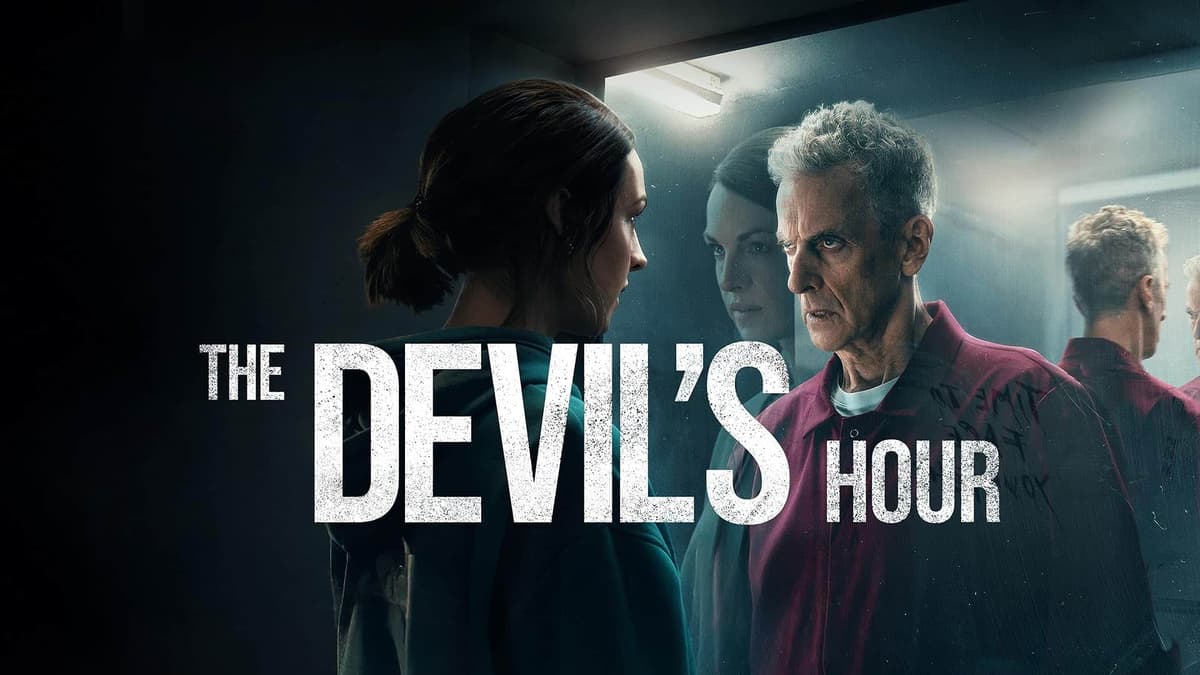
In Brazil, where consumption of suspense series, true crime, and psychological thrillers remains high, the production finds an increasingly interested audience for dense stories with multiple layers and interpretations.
What is the story of The Devil's Hour series?
The plot follows Lucy Chambers, a social worker leading an apparently ordinary life, but marked by disturbing events. Every night, she wakes up at exactly 3:33 AM after intense and recurring nightmares.
This pattern is not mere coincidence. As the series unfolds, it becomes clear that this time is linked to something much greater—a connection with events that defy rational understanding.
Additionally, Lucy faces complex personal problems that help build the emotional foundation of the narrative.
A son with unexplainable behavior
Isaac, her eight-year-old son, displays unusual behavior: he is extremely apathetic, shows no emotions, and doesn't fit traditional diagnoses. This construction dialogues with current discussions in Brazil about children's mental health and diagnostic difficulties, a topic increasingly present in public debates and health policies.
A mother in cognitive decline
Lucy's mother shows clear signs of disorientation, such as talking to herself and interacting with non-existent elements. Population aging in Brazil, highlighted by organizations like IBGE, has increased the incidence of diseases like dementia, making this aspect of the series even more relevant and close to reality.
Connection with violent crimes
Meanwhile, a series of brutal murders begins to be investigated by police. Gradually, Lucy finds herself linked to these events, becoming a key piece in a plot that mixes criminal investigation with inexplicable elements.
The meaning of 3:33 within the series
The time 3:33 is one of the most symbolic elements of The Devil's Hour. Popularly known as the "devil's hour," this moment is frequently associated with supernatural phenomena and spiritual beliefs.
In the series, however, the meaning goes beyond mysticism.
3:33 AM represents a kind of glitch in reality—an intersection point between different timelines. This concept brings the narrative close to themes like multiverse, time loops, and alternate realities, which have been gaining strength in pop culture.
Life looping: the concept that changes everything
One of the greatest differentiators of The Devil's Hour is the introduction of a central concept that redefines the entire story: the idea that life functions as a cycle.
In this universe, people relive their lives repeatedly after death, but without remembering previous experiences. The exception is Gideon, a character who retains the memory of all lived cycles.
This element completely transforms the narrative and raises important questions.
Destiny or free will?
If life repeats infinitely, to what extent do our choices really have an impact? The series prompts viewers to reflect on the control we have over our own destiny.
How far is it worth changing the future?
Gideon believes he can prevent tragedies by altering events throughout the cycles. However, his actions frequently involve moral decisions that challenge the viewer's perception of what is right.