The Return to the Universe of Gilead
When The Handmaid's Tale premiered, it quickly became a cultural phenomenon. Set in a totalitarian society where fundamental rights were eliminated, the series conquered audiences by addressing themes of oppression, resistance and survival.
Now, with The Testaments, viewers return to this universe, but from a new perspective.
A Leap in Time
The new narrative takes place approximately 15 years after the events of the original series. This time jump allows exploration of the consequences of Gilead's regime over the years, showing how it became consolidated — and even more rigid.
Unlike the story centered on June Osborne, the sequel expands the focus, bringing multiple perspectives and new protagonists.
A Generation Shaped by the Regime
One of the main differentiators of The Testaments is the approach to characters who grew up within Gilead.
These individuals never knew the world before the regime, which creates a complex dynamic between acceptance, questioning and resistance. The series explores how indoctrination and social control impact identity formation.
The Power of Margaret Atwood's Work
Both The Handmaid's Tale and The Testaments are based on Margaret Atwood's books, an author recognized for her ability to create dystopian narratives with strong social criticism.
Literature and Television Adaptation
Atwood's work has always been marked by reflections on power, gender and politics. In the adaptation for television, these elements were expanded, gaining new narrative layers.
The sequel maintains this essence, exploring even further the structures of control and the consequences of an authoritarian system.
Relevance of Themes
Even though it is fiction, the story directly addresses contemporary issues. Individual rights, freedom of expression and gender inequality continue to be central themes, which contributes to the series' relevance.
The Return of Aunt Lydia
One of the highlights of The Testaments is the return of Ann Dowd in the role of Aunt Lydia.
A Complex Character
Aunt Lydia is one of the most controversial figures in the Gilead universe. Throughout the original series, she was presented as a fervent defender of the regime, responsible for training and controlling the handmaids.
However, her complexity has always generated debate among fans, especially regarding her motivations and possible internal conflicts.
New Role in the Narrative
In the sequel, the character gains even more depth, taking on a central role in driving the story. Her trajectory promises to reveal new facets, expanding understanding of her position within the regime.
New Characters and Perspectives
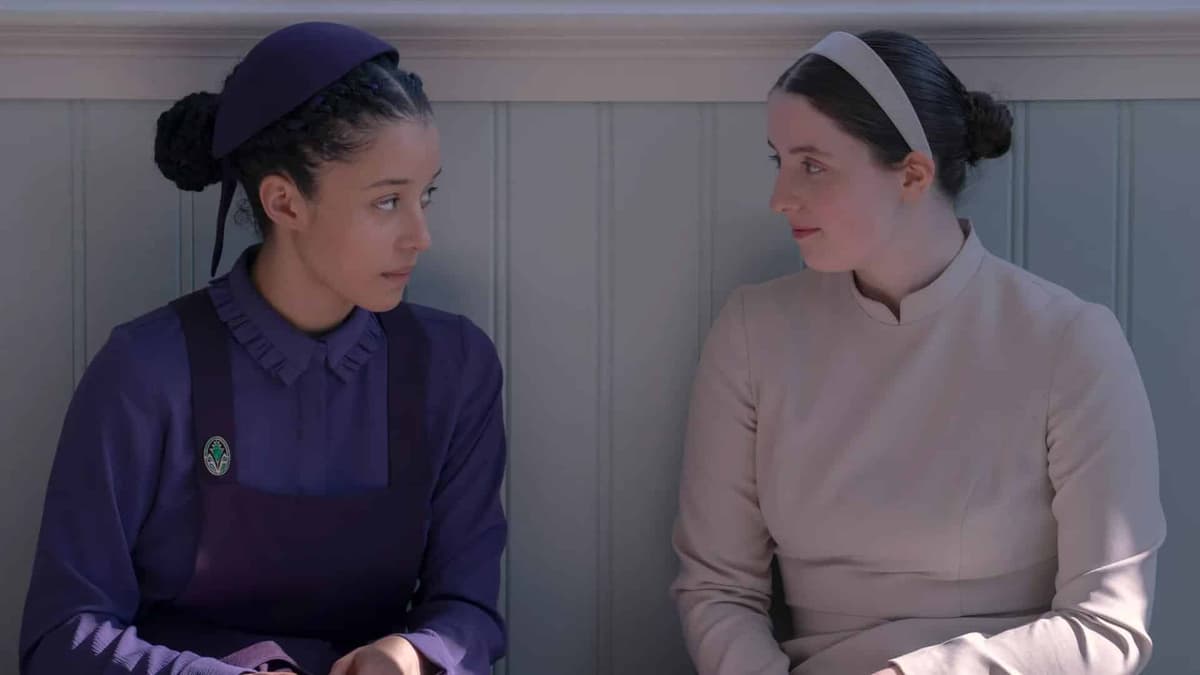
In addition to the return of familiar figures, The Testaments presents a diverse cast, with characters representing different aspects of Gilead society.
Youth Under Control
The new protagonists are young people who grew up in an environment of repression. Their stories explore conflict and the search for identity in a world designed to suppress individuality.