
Who is Galadriel's brother? We explain the character from The Rings of Power

Finrod Felagund, Galadriel's brother, had a brief appearance in The Lord of the Rings: The Rings of Power. However, the character is much more important than you might think.
The highly anticipated Amazon series begins during the Second Age of J. R. R. Tolkien’s world, in a flashback to happier times. Young Galadriel lives in the blessed realm of Valinor during the Years of the Trees, making boats and being bullied by other elf children (it’s perhaps so happy). She ends up getting into a fight (which she would have won if it had continued), but is soon pulled away by her older brother, Finrod Felagund.
Below you can continue
reading the article
Played by Will Fletcher, Finrod imparts his immense wisdom to his little sister, but when the war against the fallen Vala Morgoth breaks out, Finrod sets out to confront the main lieutenant of the villain, Sauron. But as Galadriel says, Sauron overpowered Finrod and struck the first blow. His corpse was recovered after the War of Wrath, bearing deep claw marks, along with Sauron’s personal mark.

Galadriel, played by Morfydd Clark, takes up her deceased brother's blade and inherits his purpose, developing a fierce desire to defeat Sauron.
In the series, this scene is perfect, but this brief role of Finrod only scratches the surface of what the original character of Tolkien is. So much more happens with Finrod in the books, and his death is also quite different. But what else is there to know about this powerful figure from the First Age?
Finrod's departure from Valinor is very different in The Rings of Power
The Rings of Power gives a rather condensed version of how the Elves left Valinor for Middle-earth.
Instead of a noble mission to defeat Morgoth and avenge the Two Trees of Valinor, in the original story, the Ñoldor clan is led by their king, Fëanor, who sought to reclaim the Silmarils that Morgoth stole. This was around the same time he cut down some of the precious trees.

This chapter of the history of the elves is known as The Flight of the Ñoldor, and it was not in accordance with the will of the Valar. Because of this, Fëanor ended up leading his followers into horrible acts of violence against their own kind.
And while Finrod and Galadriel did join this journey from Valinor to Middle-earth, they did so to avoid abandoning their people and not because they agreed with Fëanor.
In fact, their father would abandon the journey and return to Valinor after learning of Fëanor's violent betrayals, leaving Finrod and Galadriel to move on to Middle-earth alone.
Another thing that The Rings of Power glosses over is how Finrod left behind his one true love, Amarië, in Valinor.
Finrod ruled his own city in Middle-earth during the First Age
In the flashback of the first episode of The Rings of Power, we get the impression that Finrod traveled from Valinor to Middle-earth just to take down Sauron. But in Tolkien's mythology, the character plays a much larger role in the early development of elves in Middle-earth. And his actions are so important that they have consequences even into the next ages.
To start with, Finrod established the original Minas Tirith. Located much further north than its Third Age namesake Gondor, Minas Tirith remained a watchtower against Morgoth for several centuries until Sauron invaded and turned the fortress into an operations base. At that time Mordor was just a dream for Sauron.

However, by the time Minas Tirith fell, Finrod had already moved on to greater endeavors.
As Finrod never abandoned the Valar like Fëanor did, the Vala Ulmo appeared to Finrod and showed him a hidden network of underground caves. In this place, Galadriel's brother would build the great and almost inaccessible city of Nargothrond, which he ruled as king. But neither Minas Tirith nor Nargothrond survived during the Second Age.
How Finrod's friendships affect The Lord of the Rings
However, Finrod's true influence over Middle-earth was not defined by the fortresses he built, but by the friendships he made along the way.
During the First Age, Elves and Dwarves fought far less than in The Rings of Power and The Lord of the Rings. The two races often allied themselves.
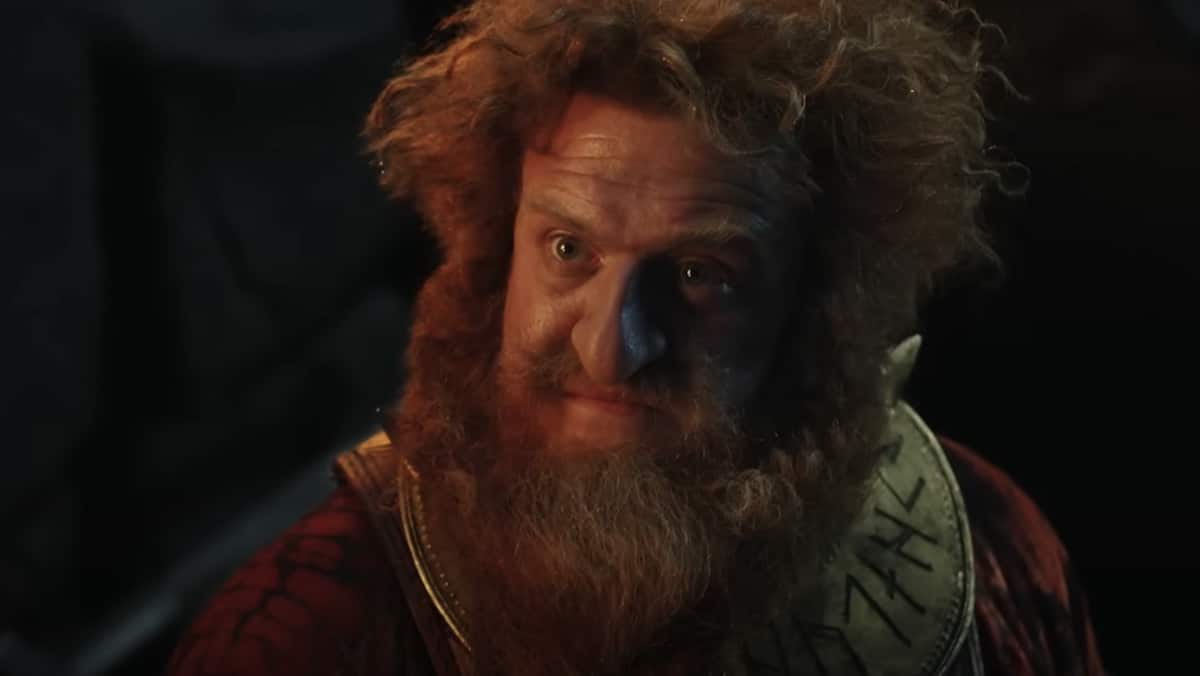
Among the friendliest collaborators was Finrod, who built Nargothrond with the help of the dwarves and generously paid his helpers for their service.
Finrod's good relations with the Dwarves (who called him Cave-Hewer in their own tongue) are remembered even in The Lord of the Rings, as Gimli sings about "mighty kings in Nargothrond" during The Fellowship of the Ring.
These diplomatic efforts with the Dwarves are only surpassed by Finrod's relationships with the Men of Middle-earth, whom he encountered entirely by chance. Finrod shared his knowledge with these mortals, learned their language and customs, and helped end disputes between the local elves and the men.
Finrod grew especially close to the House of Bëor, and invited the very Bëor to spend the rest of his days in Nargothrond. Again, this relationship proves crucial in later stories, as the House of Bëor is one of the three houses that settled in Númenor during the Second Age.
The descendants of Bëor trace all the way to Elendil and Isildur, which culminated in Aragorn from The Lord of the Rings.
Why The Rings of Power changed Finrod's death
Galadriel, as played by Morfydd Clark, is perfectly clear about how her brother died in The Rings of Power - Finrod fought the Lord, and the Lord won.

Arguably the biggest change that Amazon makes in the live-action is Finrod's death, which was written by JRR Tolkien in The Silmarillion quite differently.
Tolkien’s First Age is defined by a series of great battles between Morgoth and the Elves, building towards the conclusive War of Wrath. The Dagor Bragollach is among the most infamous of these confrontations and resulted in huge elven casualties.
Finrod would have been one of those corpses, if he hadn't been rescued by Barahir - a descendant of the House of Bëor. Naturally, the honorable Finrod swore an oath to Barahir, giving his ring as a symbol of friendship, and this ring - a symbol of the bond between Men and Elves - would pass all the way to Aragorn, who gifts it to his beloved, Arwen. Although Barahir himself doesn't invoke Finrod's oath of friendship, his son, Beren, does.
Wanting the approval of the elven princess Lúthien's parents, Beren needed a Silmaril stolen from Morgoth to win them over. He then traveled to Nargothrond and asked Finrod to fulfill his oath by joining him on the mission. Only then would Galadriel's brother openly hunt the enemy – not to kill Sauron, but to steal one of Fëanor's famed gems and win a wife for his friend.
Tragically, Beren and Finrod's company was captured by Sauron and taken to the ancient watchtower of Minas Tirith, now under the command of the Dark Lord. And in that place, Finrod gave his life to protect Beren.
The Rings of Power changes Finrod's quest from friendship to revenge, seemingly to provide Galadriel with a more personal motivation to hunt Sauron.
Episodes 1 and 2 of the series explore in detail how Galadriel is alone in her determination to eliminate all the last remnants of evil in Middle-earth, and her older brother's death provides a justification for that unquenchable inner fire.
Whether all of Finrod's story needed to be eliminated to achieve this will be a matter for The Rings of Power audience to decide, but there's no denying that Finrod becomes a plot device for his sister, rather than a character in his own right.
Why Finrod and Galadriel are so close in The Rings of Power
Tolkien's books tell that the relationship between siblings Finrod and Galadriel mostly occurs in adulthood. But the pair remained close throughout the centuries, with Galadriel regularly visiting her brother in Nargothrond.

Tolkien also writes that Galadriel was closer to Finrod than her other siblings, and The Rings of Power takes this suggestion essentially erasing the other two remaining siblings completely.
While the sibling closeness is described in the mythology of The Lord of the Rings, Galadriel never sought revenge so directly for her brother. She remained proud that Finrod fulfilled his oath to Barahir, and the incident likely sharpened her hatred for Sauron and the forces of darkness, but Galadriel never set out to kill her brother’s killer.
The Rings of Power portrays Finrod and Galadriel similar to a human sibling dynamic, with the older brother caring for the younger sister.
Although not necessarily a contradiction, Tolkien wrote familial relationships among elves with a more formal tone, and because of their immortality, the concepts of "older brother" and "younger sister" were often less pronounced than the flashback of The Rings of Power suggests.
This distinctly human representation of sibling love was likely designed to make Galadriel's personal journey more meaningful.


