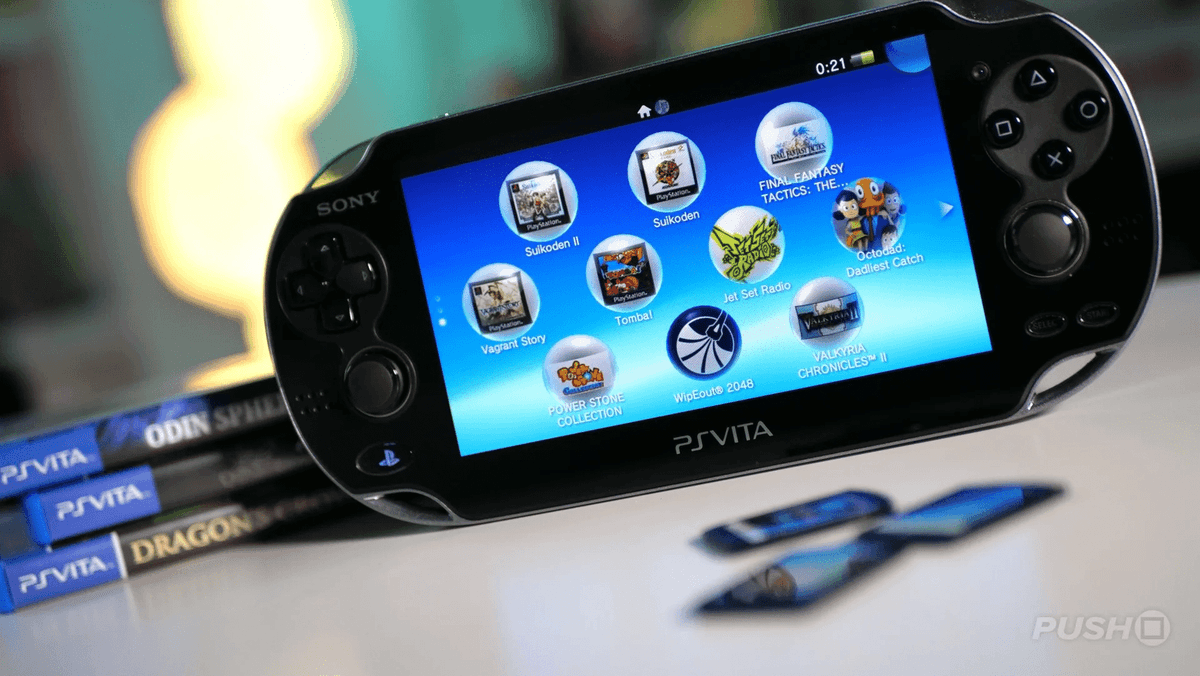
Sony's Return to the Portable Console Market
The possibility of a new portable console marks a strategic return by Sony to a segment it has previously explored with products like the PlayStation Portable (PSP) and PS Vita. Although both gained a loyal fan base, the company ended up moving away from this market in recent years.
Now, with the growth of hybrid and portable devices like the Nintendo Switch and new portable PCs, the landscape has changed. Demand for high-level experiences on compact devices has opened space for a new competition.
The Influence of Competition
The success of the Switch and the emergence of devices like the ROG Ally demonstrated that there is room for innovation in the segment. These devices combine mobility with performance, something that previously seemed limited.
In this context, Sony may be preparing an ambitious response, betting on cutting-edge technology to stand out.
Leaked Specifications and the Power of Portable PS6
According to information attributed to industry sources, the new portable—known internally as "Project Canis"—should feature impressive technical specifications for a device in its category.
Architecture and Processing
The console should use a CPU based on Zen 6 architecture with hybrid cores for efficiency. The configuration includes four Zen 6c cores and two Zen 6 LP cores, designed to balance performance and energy efficiency. This combination allows handling demanding games without compromising battery life.
Manufacturing at 3 nanometers, possibly by TSMC, represents a significant advance in efficiency and transistor density, contributing to greater performance with lower energy consumption.
GPU and Graphics Capability
The GPU, based on RDNA 5 architecture, should feature 16 compute units and operate between 1.6 and 2.2 GHz. This setup places the portable at a surprising level.
One of the highlights is the performance in ray tracing and path tracing, technologies that simulate the real behavior of light to create more realistic graphics. According to rumors, the portable could surpass Xbox Series S performance in these aspects. Ray tracing and path tracing are considered the future of real-time graphics, and their presence on a portable device indicates an important technological leap.
Memory and Storage
The device should feature 24 GB of LPDDR5X memory with a 192-bit bus, ensuring high bandwidth for modern games. Additionally, there is support for M.2 SSD and microSD cards, allowing storage flexibility. The presence of SSD ensures fast loading times and better overall performance.
PSSR 3 and the New Generation of Upscaling
Another central point is PSSR 3 technology, which should act as an AI-based upscaling solution. Currently, technologies like DLSS and FSR dominate the market. PSSR 3 could compete directly with these solutions.