
From Lara Croft's chest to Captain Marvel's butt | The end of hypersexualization of women in superhero films

On the current representation of captive heroines in audiovisual media
Since feminist manifestations calling for equal rights and an end to hypersexualization came into vogue, the cause has taken on larger proportions, gaining voices in the media, such as actresses like Emma Watson and Jennifer Lawrence. On social media it was no different: texts and discussion threads took over Facebook and Twitter, reaching the ears of major audiovisual producers. With that, superhero films, especially those with prominent female characters, began to give more humanized characteristics to their heroines, as well as scripts with greater and well-deserved female protagonism in important events, leaving aside the trivial parade of sculpted bodies and empty dialogue that only served to give male characters the chance to stand out.
Films featuring heroines like Wonder Woman, Lara Croft, and the upcoming Captain Marvel began to finally give deserved protagonism to these characters in the way they should really be shown: presenting their heroic facets before a society in danger. However, those nostalgic for the "old model" began to criticize this new wave of characters, using their 'fidelity' to the original script. The problem is that among the arguments, the lack of generous female body shapes was always evident, and the heroic attributes these characters could present were almost never discussed.
From Lara Croft's chest to Captain Marvel's butt, find out why the end of hypersexualization of female characters in superhero films is so important.
With that, superhero films, especially those with prominent female characters, began to give more humanized characteristics to their heroines, as well as scripts with greater and well-deserved female protagonism in important events, leaving aside the trivial parade of sculpted bodies and empty dialogue that only served to give male characters the chance to stand out.
Films featuring heroines like Wonder Woman, Lara Croft, and the upcoming Captain Marvel began to finally give deserved protagonism to these characters in the way they should really be shown: presenting their heroic facets before a society in danger. However, those nostalgic for the "old model" began to criticize this new wave of characters, using their 'fidelity' to the original script. The problem is that among the arguments, the lack of generous female body shapes was always evident, and the heroic attributes these characters could present were almost never discussed.
From Lara Croft's chest to Captain Marvel's butt, find out why the end of hypersexualization of female characters in superhero films is so important.
Lara Croft
Below you can continue
reading the article
 The recent Tomb Raider - The Origin, a film based on the reboot of the classic 1996

 The considerations in question are purely mistaken. After the game reboot in 2013, Lara Croft appears with a body with less emphasis on curves and more realism in the action scenes she participates in. Her hair gets messed up, her body gets dirty with mud, her clothes sometimes suffer wear and tear because of the situation—much more appropriate for the tomb raider's story. After all, what woman would face dangers in the middle of the forest wearing tiny shorts and enormous breasts?
 Despite her characteristic Israeli model beauty, Gal Gadot also faced criticism for presenting a more slender body shape. Critics pointed out that it would deviate from the typical physical ideal of an
  And then the first images of the upcoming Captain Marvel emerge. Bringing the heroine that gives her name to the major film and comic producer, the title is already heavily criticized for the lack of physical attributes of Brie Larson.
Brie Larson, Academy Award winner for Best Actress, awarded a Golden Globe and a BAFTA, had her performance diminished before any
And then the first images of the upcoming Captain Marvel emerge. Bringing the heroine that gives her name to the major film and comic producer, the title is already heavily criticized for the lack of physical attributes of Brie Larson.
Brie Larson, Academy Award winner for Best Actress, awarded a Golden Globe and a BAFTA, had her performance diminished before any 

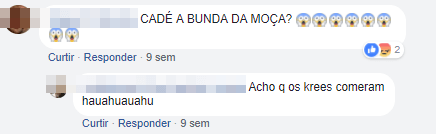 It would be funny if it weren't tragic.
Therefore, it is more than necessary for the continuity of women in all their plurality and diversity to represent heroines in the most diverse spheres of the audiovisual universe. People who impact through their representativeness, example of strength and courage, artistic and professional performance—and no longer through simple physical attributes.
As Tina Turner used to say, we don't need another hero. We need a more mature audience.
It would be funny if it weren't tragic.
Therefore, it is more than necessary for the continuity of women in all their plurality and diversity to represent heroines in the most diverse spheres of the audiovisual universe. People who impact through their representativeness, example of strength and courage, artistic and professional performance—and no longer through simple physical attributes.
As Tina Turner used to say, we don't need another hero. We need a more mature audience.


