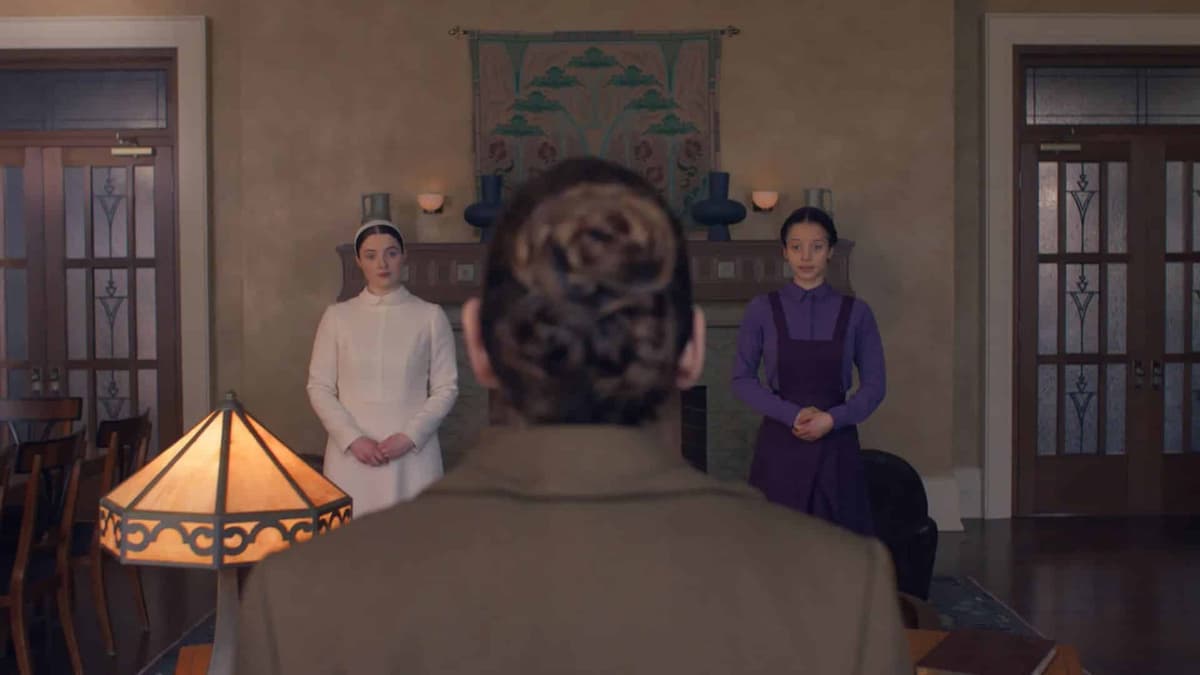
The Legacy of The Handmaid's Tale
A dystopia that transcended fiction
Before diving into the details of The Testaments: The Handmaids of Gilead, it is essential to understand the impact of The Handmaid's Tale on the television landscape.
Originally launched in 2017, the series quickly became a cultural phenomenon, not only for its engaging narrative but also for its political and social relevance. Set in a totalitarian society where women are stripped of their rights, the production won important awards, including the Emmy Awards, and established Elisabeth Moss as one of the great protagonists of contemporary television.
The Literary Work as Foundation
The original series was inspired by the novel The Handmaid's Tale, published in 1985. Decades later, Margaret Atwood returned to the universe with the literary sequel The Testaments, which serves as the basis for the new production.
The book was released in 2019 and quickly became a bestseller, and won the Booker Prize, reinforcing the relevance of the story and its ability to dialogue with the contemporary world.
The Testaments Plot: The Future of Gilead
A New Generation Under the Regime
The plot of The Testaments: The Handmaids of Gilead takes place about fifteen years after the events of The Handmaid's Tale. In this interval, Gilead not only survived but became even more rigid and oppressive.
The narrative follows characters who grew up within this system, without knowing another reality. This creates a different dynamic from the original series, which focused on individuals who still remembered the previous world.
Multiple Perspectives and Fragmented Narrative
Like in the book, the series adopts multiple points of view to tell its story. This approach allows the audience to understand different layers of Gilead's society, from the most privileged to the most oppressed.
The narrative fragmentation also helps increase suspense, gradually revealing the secrets and tensions that permeate the regime.
Resistance and Questioning
One of the central themes of the new series is the awakening of consciousness. Characters who grew up believing in the legitimacy of Gilead begin to question the system, creating internal and external conflicts.
This change in perspective adds depth to the narrative, showing that even in highly controlled environments, doubt and resistance can emerge.
The Return of Aunt Lydia
A Complex Character
One of the biggest attractions of The Testaments: The Handmaids of Gilead is Ann Dowd's return in the role of Aunt Lydia.
In the original series, the character was seen as one of the most rigid and controversial figures of the regime. However, over time, nuances began to emerge, revealing contradictions and possible hidden motivations.
A New Look at the Character
In The Testaments: The Handmaids of Gilead, Aunt Lydia gains even more depth. The narrative suggests that her loyalty to the regime may not be as absolute as it appears, opening space for reinterpretation.