This reunion brings no relief — instead, it reignites old wounds that were never overcome.
The Last Giant speaks about abandonment, guilt, and second chances
The film's starting point is simple, but loaded with emotional tension: a father who abandons his son in childhood returns after 28 years trying to make up for lost time.
However, The Last Giant avoids the cliché of immediate reconciliation. Boris shows no desire to reconnect. His reaction is marked by coldness, discomfort, and even hostility — understandable feelings in the face of an abandonment that marked his entire life.
This direct conflict between father and son sustains the narrative. The screenplay builds, with intensity, the idea that not every relationship can be rebuilt merely with regret.
Disease as dramatic urgency
The situation becomes even more complex when Julián reveals he has terminal cancer. This element introduces a sense of urgency: the time to resolve the past is running out.
But the film does not use the disease as an easy emotional solution. Instead, it reinforces the central dilemma: should forgiveness be granted only because time is running out?
This question echoes throughout the entire narrative and speaks directly to the real experiences of many Brazilians, where broken family relationships do not always find resolution, even in extreme situations.
The setting as an extension of emotions
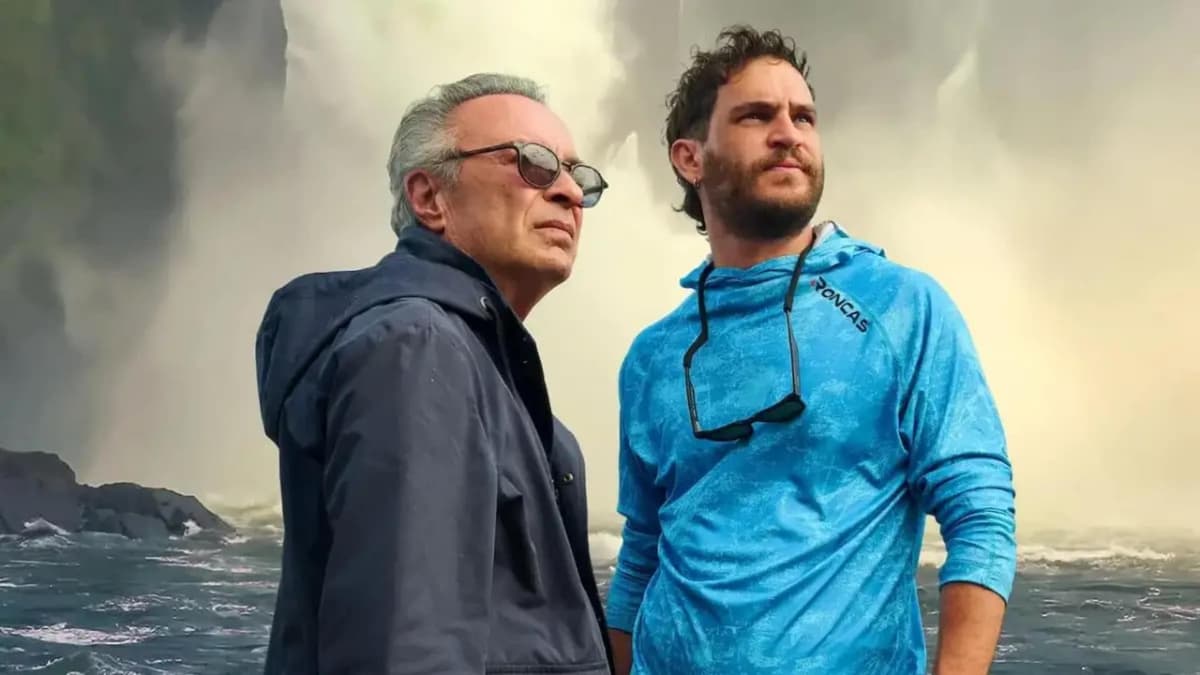
One of the film's greatest successes is the use of Iguazu Falls as a narrative element.
The setting is not merely a backdrop. The force of the waters, the constant noise, and the grandeur of the landscape reflect the emotional turmoil experienced by the characters.
Just as the waterfalls are intense and uncontrollable, the feelings between father and son are too. There is an accumulation of resentment that, at some point, needs to overflow.
Routine as emotional prison
Boris works daily guiding tourists through the falls. This repetition reinforces the idea that he is trapped not only by work, but also by the past.
Even in the face of a grand landscape, his life is limited by unresolved trauma — a contrast that gives depth to the narrative.
The Last Giant has performances that sustain the drama
Oscar Martínez delivers an imperfect father. Martínez constructs a complex Julián: fragile, regretful, but far from innocent. His performance avoids turning the character into a victim.
He represents someone who made selfish decisions and now must deal with the consequences — with no guarantee of redemption.
Matías Mayer interprets Boris with a quiet intensity. His character does not seek public sympathy. He is hard, closed off, and at times, cruel.
But this posture makes sense: this is someone who grew up without a father and had to deal alone with the consequences of that abandonment.
This duality between the characters is what gives strength to the film.
The central debate: is forgiveness an obligation?
The Last Giant raises a profound and current discussion: is forgiveness a moral duty or an individual choice?
In Brazil, this theme is especially relevant. Data from institutions like IBGE show that millions of Brazilians grow up in homes with absent parents or broken family relationships.