
Miller's Crossing (1990): A Sophisticated and Atmospheric Noir Film by the Coen Brothers

Miller's Crossing is a cinematic work released in 1990 by the Coen brothers, one of the most remarkable duos in American cinema.
With a style that blends the best of the noir genre with the Coen's unique peculiarity, the film has become a cult classic, revered by fans and critics.
Below you can continue
reading the article
Set during Prohibition in the United States, Miller's Crossing delves into themes of loyalty, betrayal, and moral dilemmas, all wrapped in a dense and nuanced atmosphere.
This film not only presents a complex narrative but also offers a deep reflection on human behavior in extreme pressure scenarios.
Its combination of sharp dialogue, memorable characters, and refined visual direction made it one of the Coen brothers' most sophisticated productions. If you haven't had the pleasure of watching it yet, this article will explore why Miller's Crossing (1990) is considered a landmark in modern noir cinema.
Read more:
“Peep Show”: The innovative British sitcom that reveals the innermost thoughts of two dysfunctional friends
Plot: Between Loyalty and Conscience
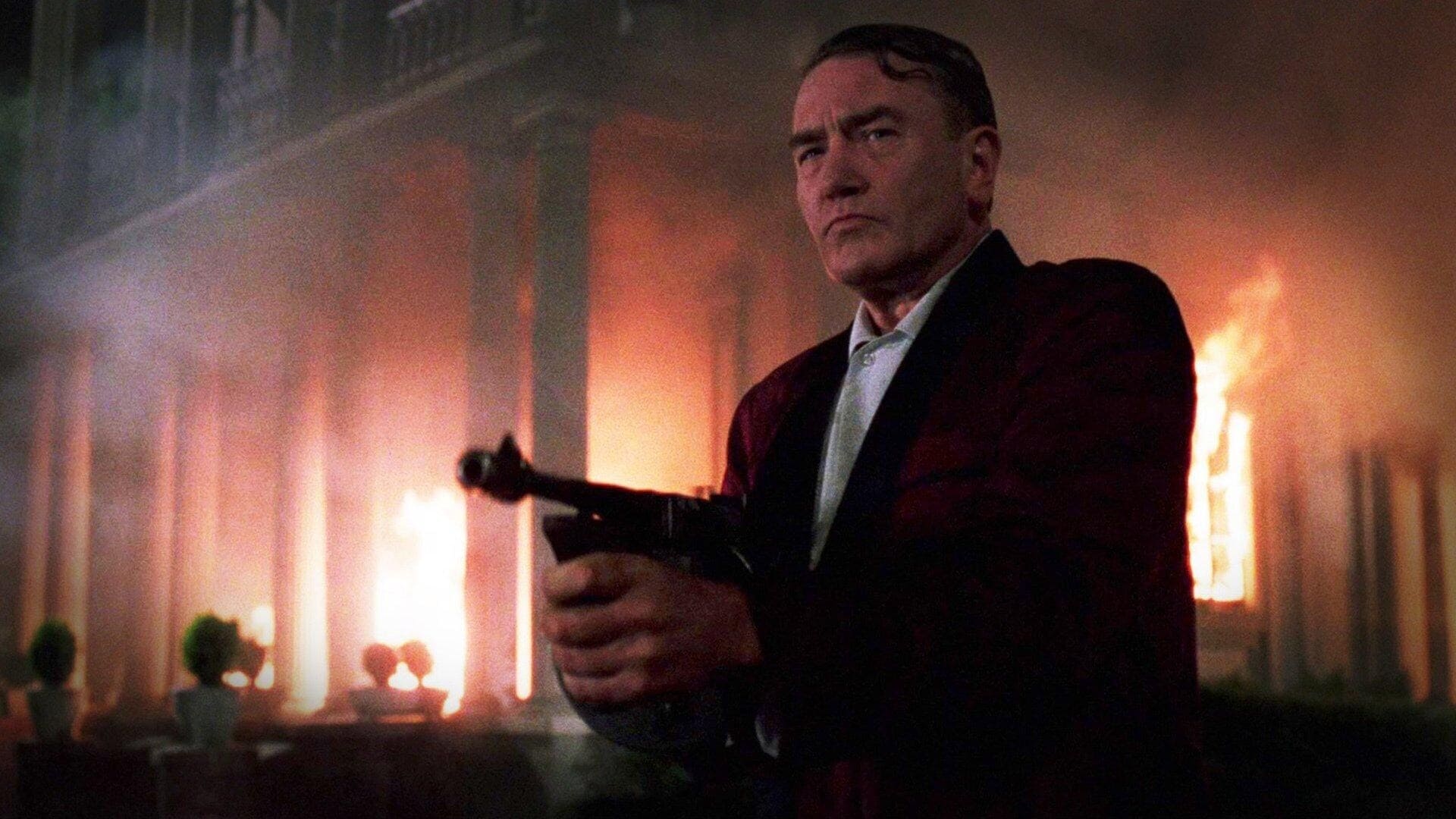
The plot of Miller's Crossing revolves around Tom Reagan (played by Gabriel Byrne), a former aviator who works as the right-hand man of Leo O'Bannon (Albert Finney), a powerful mob boss in a fictional city during Prohibition.
Tom finds himself at the center of a turf war between Leo and rival boss Johnny Caspar (Jon Polito), a mobster specializing in extortion and illegal gambling control.
Throughout the film, Tom is placed in a difficult position, forced to make choices that challenge his loyalty to Leo and his own conscience.
His friendship with the boss is put to the test, as is his romance with Verna (Marcia Gay Harden), who is also involved with Leo's character. The plot unfolds in a game of manipulations, betrayals, and confrontations, featuring an end that reflects the moral ambiguity characteristic of the noir genre.
Main Characters and Performances
The cast of Miller's Crossing is one of the film's great strengths, featuring memorable performances that help deepen the moral and emotional complexity of each character.
Tom Reagan (Gabriel Byrne)
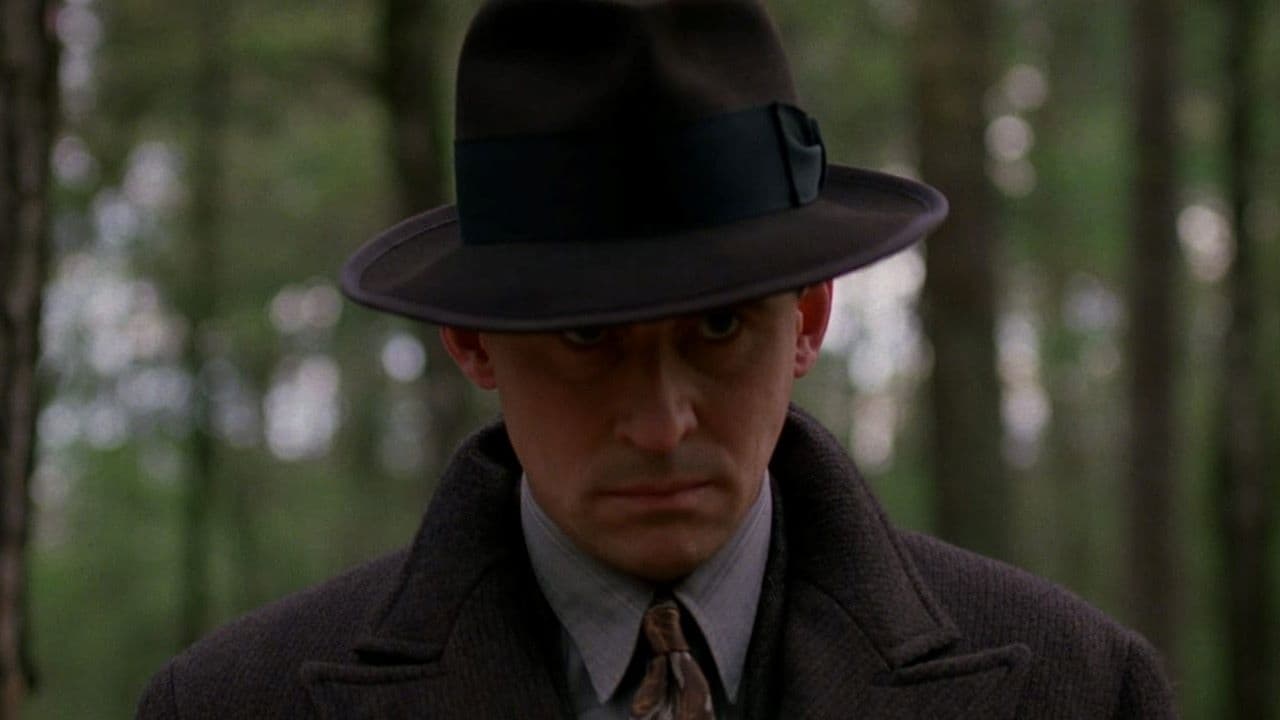
The protagonist, Tom Reagan, is the typical anti-hero of the noir film. An intelligent, calculating, and emotionally distant man, Tom lives in a world where loyalty is a negotiable commodity and morality is flexible.
Gabriel Byrne, in one of his best performances, masterfully portrays Tom's ambiguity, bringing to life a character who is neither completely good nor entirely evil.
Leo O'Bannon (Albert Finney)
Leo is the mob boss who, at first glance, appears to be a strong and imposing figure, but as the plot unfolds, reveals his weaknesses and insecurities.
Albert Finney brilliantly interprets the character, capturing the duality between a ruthless businessman and a boss striving to remain loyal to his own principles, despite being constantly manipulated.
Johnny Caspar (Jon Polito)
Johnny Caspar is Leo's rival, a man who, behind his facade of rigid morality, hides a violent and manipulative character.
Polito's character is a blend of brutality and sophistication, making him a memorable antagonist. He represents the external threats Tom faces while trying to balance his loyalty and his conscience.
Verna (Marcia Gay Harden)
Verna is a complex woman who plays a crucial role in the story, being at the center of rivalries among the main characters. She is both an object of desire and a symbol of manipulation, serving as both a fascinating and treacherous character.
The Coen Brothers' Noir Style
The Visual Aesthetic
The aesthetic of Miller's Crossing is unmistakable, following the tradition of noir films with cinematography that emphasizes dense shadows, low lighting, and a sober color palette.
The cinematographer Barry Sonnenfeld, who worked with the Coens on the film, captured a sense of tension and paranoia, essential for creating the film's unique atmosphere.
The interiors are often dark and claustrophobic, with conversations taking place in bars, offices, and rooms.
This visual style reflects the distrust and moral dilemma faced by the characters, giving the film a sense of being constantly in a hostile and suspicious environment.
The Use of Music
The soundtrack of Miller's Crossing is equally crucial for building its atmosphere. Although the film is not marked by an overt soundtrack, the music by Carter Burwell, who frequently worked with the Coen brothers, serves to intensify the emotional tension.
The use of popular songs from the Prohibition era helps set the film in its historical context, creating a sense of authenticity.
Central Themes of Miller's Crossing
Loyalty and Betrayal
Loyalty is one of the central themes of Miller's Crossing. Tom Reagan lives in a world where trust is a rare and volatile commodity. He is constantly confronted with the need to make difficult decisions that challenge his fidelity to Leo O'Bannon, his mentor and friend, and his conscience.
Betrayal, both personal and professional, lurks at every turn, and Tom's choices reflect the internal struggle between what is right and what is convenient for his survival.
Ambiguous Morality
Like the best of noir films, Miller's Crossing explores the ambiguous morality of its characters. No one is entirely good or completely evil, and the characters' choices are driven by conflicting desires.
The Coen brothers create a narrative where the concept of morality is relative, and what seems like a right decision can turn into betrayal or deception.
The Pressure of Fate
The film also deals with the inevitability of fate. Tom Reagan, like many characters in noir films, seems trapped in a cycle from which he cannot escape.
His actions and choices are always determined by the circumstances he finds himself in, giving the film a sense of fatalism and despair.
The Impact and Legacy of Miller's Crossing
Although Miller's Crossing was a mid-budget film and received mixed reception at the time of its release, over time it has been recognized as one of the Coen brothers' most sophisticated works.
Its visual and narrative style influenced generations of filmmakers and noir cinema fans. The film is also frequently cited as one of the best examples of modern noir, helping to revive the popularity of this classic style.
Over the years, Miller's Crossing has been reinterpreted by critics and audiences, coming to be regarded as one of the greatest classics of the 1990s. Its cult status is assured, and its influence can be seen in many other crime and mob films that emerged after its release.
Conclusion
Miller's Crossing is a masterpiece of noir cinema, sophisticated and atmospheric, with the Coen brothers' trademark style. It dives deep into the complexities of loyalty, betrayal, and morality, keeping the viewer on the edge of their seat with every twist and revelation.
If you are a fan of the noir genre or simply appreciate a good psychological drama, Miller's Crossing is an unmissable experience.
Your visual style, impressive performances, and engaging narrative continue to captivate and challenge audiences, making it one of the brightest gems of 90s cinema.
Watch the trailer for "Miller's Crossing"
In Brazil, Miller's Crossing is available on Disney+.


